A Commute Worth Taking
Six shifts shaping the future of the workplace in the age of AI.
Georges Hung
When AI can do much of the work at a desk, the office has to offer what a desk cannot: each other.
The contest between home and headquarters is largely settled. Hybrid is the norm, and presence is rising where the office gives people a reason to come. The larger change is AI. It drafts, summarises, codes and analyses—and moves people’s work toward direction, judgment, review and invention. Its help is uneven: novices in one study became 34% more productive, while experienced developers in another took 19% longer, believing all the while that AI had made them faster.
My argument: the office’s value has moved. It is no longer where individual work gets done. It is where people learn from one another, decide together, and invent what neither they nor their tools could produce alone. I call this the studio workplace.
Why now
Four forces are converging on the workplace. Each is well documented. Few workplace strategies yet respond to all four together.
- 15×
- rise in active AI agents in a single year—yet only 13% of users are rewarded for redesigning how work is done. The technology is ready faster than the workplace around it.
- 66%
- US office occupancy on Tuesdays in late 2025, the highest since 2020. Hybrid works; people come in when there is a reason, and on the same days as colleagues.
- 20%
- global employee engagement in 2025, the lowest since 2020. Managers fell from 27% to 22%—they carry the change and are the least supported.
- 97%
- occupancy of Riyadh’s Grade A offices, while Hong Kong buildings over 30 years lose tenants. The question is no longer whether offices are needed, but which ones.
What the flexible-office consensus gets wrong
The post-pandemic consensus promised flexibility, collaboration, wellbeing and seamless technology. Together they described an office defined mainly by what it no longer required. Three assumptions need testing.
- Open is not the same as collaborative. When two Fortune 500 companies moved to open plan, face-to-face interaction fell by around 70%. Shared space supports collaboration only alongside enclosure: rooms where a team can argue, quiet places to think, settings where a conversation will not disturb twenty others.
- Home versus office is the wrong question. Two days at home cut resignations by a third with no loss of performance. What proximity adds is learning: juniors seated near teammates received 18% more feedback. Presence trades some senior output today for junior growth tomorrow—a trade design should make deliberate.
- AI is not another collaboration tool. It changes the work itself, unevenly. 41% of workers have received AI “workslop”—content that looks finished but isn’t, taking close to two hours to fix. AI moves effort from producing to reviewing, and review is human, social work that needs a place.
When everyone can see and hear everyone, people withdraw into headphones and screens.
Innovation as the differentiator
Like “experience” in retail, “innovation” has become a tagword—sensors, booking apps, a branded ideation room. A workplace cannot supply ideas. It can change the conditions in which they form, spread and get tested. A study of 61,000 Microsoft employees found remote work made networks more siloed, with fewer ties across groups—the weak ties where new combinations of knowledge begin. Six conditions matter.
- CollisionShared stairs, cafés and routes that cross team boundaries, so people meet those they would never schedule a meeting with.
- VisibilityWork on walls and screens where others can see, question and improve it.
- PrototypingWorkshops, labs, mock-up rooms and sandboxes close to where ideas are discussed.
- CritiqueRooms for honest review of work, human- or AI-made, with the right size, acoustics and display.
- ApprenticeshipJuniors near experienced colleagues, so tacit knowledge passes on by watching, asking and doing.
- EcosystemGround floors, labs and events shared with partners, universities, start-ups and the city.
Two tests: Did anyone meet someone this week, outside their team, who changed how they approached their work? Is the work visible enough that others could improve it? And the best organisations treat their own workplace as a prototype—pilot a floor, measure, ask, revise. A workplace built as a finished product ages from the day it opens.
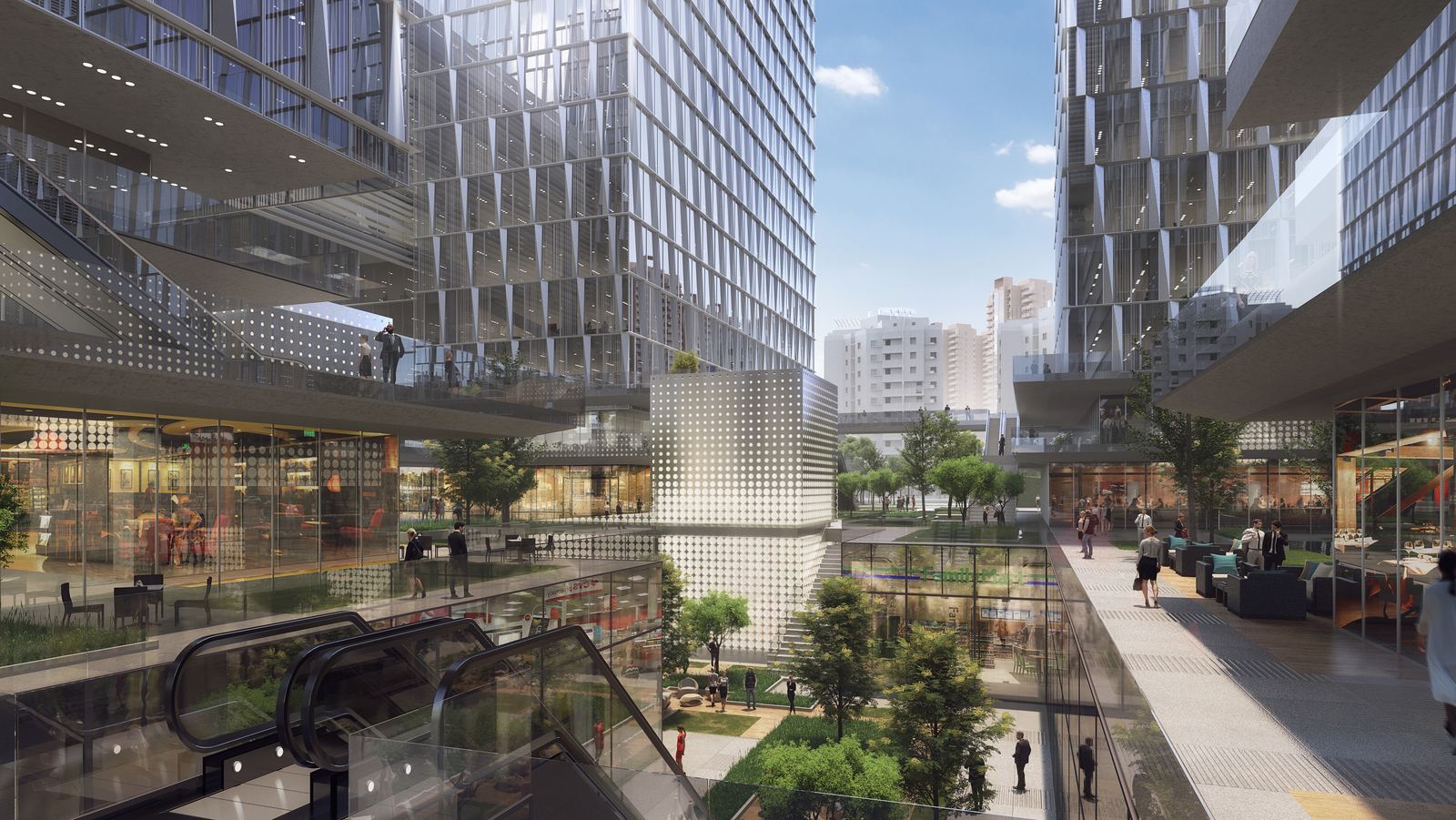
A workplace cannot supply ideas. It can change the conditions in which they form, spread and get tested.
Defining the studio workplace
A place where people come together to learn, decide and invent; where work is visible and critique is normal; where focus and wellbeing are protected; and where the building can adapt as work and technology change. The architect’s studio—making, critique and apprenticeship, in company—is the right model.
- ConveningDoes every office day have a reason to be there, shared with the people who matter to the work?
- ApprenticeshipAre less experienced people close enough to experienced colleagues to learn by watching, asking and doing?
- FocusCan anyone find a quiet, daylit, well-ventilated place for concentration or a private conversation—including with AI?
- InventionDo space and routine create encounters across teams, make work visible, and allow ideas to be prototyped?
- AdaptabilityCan floors, leases and uses change as headcount, technology and work patterns shift?
Six shifts
- From desk to studio. The unit of design becomes the project, not the desk: team neighbourhoods with project walls, shared screens and tables for the whole team. When AI drafts in minutes, the scarce activity is deciding what is good—so put the work where people can see it.
- From individual output to human–agent teams. Machines take on more execution; people set direction, review and decide. More small rooms for two to six, more enclosed space for thinking, and far more acoustic privacy. A floor where everyone talks to an assistant cannot be open plan.
- From attendance to apprenticeship. AI is absorbing the routine tasks through which juniors once learned. The office is where that ladder is rebuilt—like a teaching hospital. Seat juniors near experienced colleagues on anchor days, with focus rooms close by to protect senior time.
- From open plan to a range of settings. Libraries for quiet, team rooms for noise, workshops for making, terraces and cafés for encounter—each acoustically separated. Wellbeing starts with daylight, fresh air, thermal comfort and sound, and benefits everyone, including neurodivergent colleagues.
- From tower to district. The office competes with home, and home is quiet and free. What the office can offer is the city: food, culture, transit and chance encounters. Share ground floors and podiums with the public; in Riyadh, the district around the office will shape where talent chooses to work.
- From fixed lease to adaptive asset. Occupancy peaks midweek; headcount changes faster than leases. Retrofit before replacement—light retrofits can cut energy around 17% with payback under a year. Design new offices with generous floor heights and separable servicing for future conversion.
The framework
The five tests become indicators set in the brief, checked at design review and tracked in use.
- ConveningShare of in-office time spent with others; peak-day utilisation versus average.
- ApprenticeshipJuniors seated near senior colleagues on anchor days; frequency of feedback reported.
- FocusEnclosed, acoustically private settings per 100 people; daylight, air and reverberation targets met.
- InventionCross-team interactions; floor area for making, prototyping and review; pilots run per year.
- AdaptabilityFloor area convertible without structural change; lease flexibility; retrofit plan in place.
What this means
Leaders & occupiers
- Give every office day a purpose—anchor days by team, not by rule.
- Invest in managers. They carry the change and are the least engaged.
- Redesign roles and rewards for AI, and protect the learning path for juniors.
Owners & developers
- Compete on district, not only building. Share ground floors and amenities with the city.
- Retrofit before replacing; design new buildings for future conversion.
Cities
- Plan workplaces within mixed-use, transit-served districts.
- Support converting obsolete offices to housing, education and labs.
Design teams
- Design around projects, review and apprenticeship, not desk ratios.
- Provide far more acoustic privacy as voice AI spreads.
- Run the workplace as a prototype: pilot, measure, revise.
Worth the commute
For a century, the office was where work lived: the files, the machines, the people who knew how things were done. Much of that now lives in the cloud and, increasingly, in AI. What remains is what cannot be sent through a network: learning a craft by watching someone better, reaching a hard decision in the same room, the idea that comes from a stranger in the lift, and the sense of belonging to something larger than one’s own task. Those are the reasons people will make the journey.
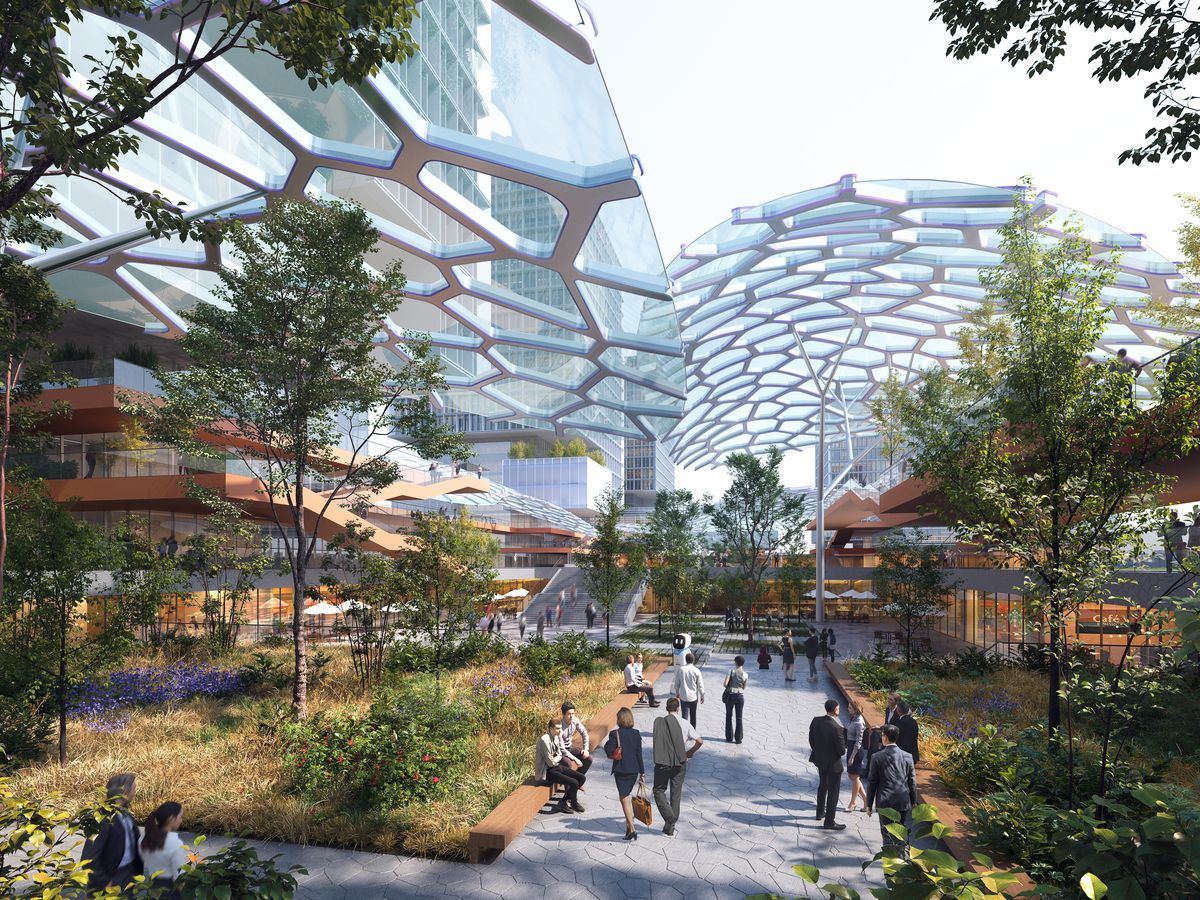
When AI agents can do most of the work online, the workplace must do more to connect us.