Intencity • Dencity
How people will live and thrive in the cities of Asia and the Middle East, and how AI and sustainability will shape them.
Georges Hung
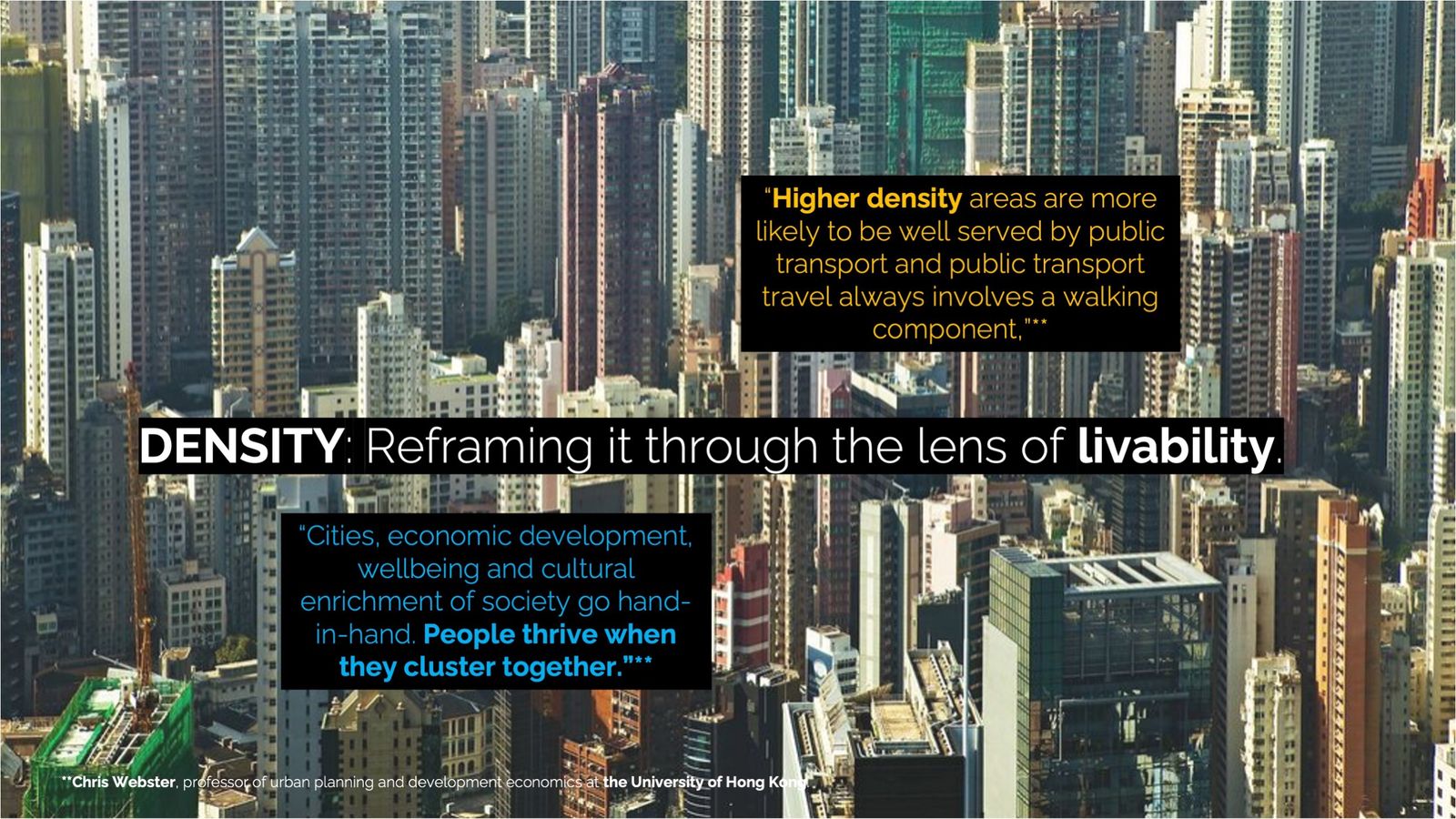
Density is a number. Intensity is how a city feels to live in.
Asia and the Middle East will write the next chapter of the world’s cities. They will also write it under the hardest conditions: extreme heat, scarce water, some of the oldest populations on earth and some of the youngest. Two forces will decide how they respond. AI, which can plan and run a city with new precision while adding a vast new load to it. And sustainability, which in this region means adapting to heat and water as much as cutting carbon.
My argument is simple. The goal is not a denser city, or a smarter one. It is a more intense one: a city that offers more life, comfort and opportunity per unit of land, carbon and water. I call it Intencity.
Why now
Five forces are converging. Each is serious alone. Together they ask for a different way of planning, building and running cities.
- 19 of 33
- of the world’s megacities are in Asia. Cities will absorb two-thirds of global population growth to 2050.
- 1.6 → 5.6 bn
- air conditioners worldwide by 2050. Heat now decides how far people walk and how much energy a city burns.
- < 500 m³
- of water per person a year across MENA by 2030, below the threshold of absolute scarcity.
- 1 in 4
- people in Asia-Pacific will be over 60 by 2050. Saudi Arabia’s median age is 29.
- 415 → 945 TWh
- data-centre electricity, 2024 to 2030. AI is arriving as a tool and as a load.
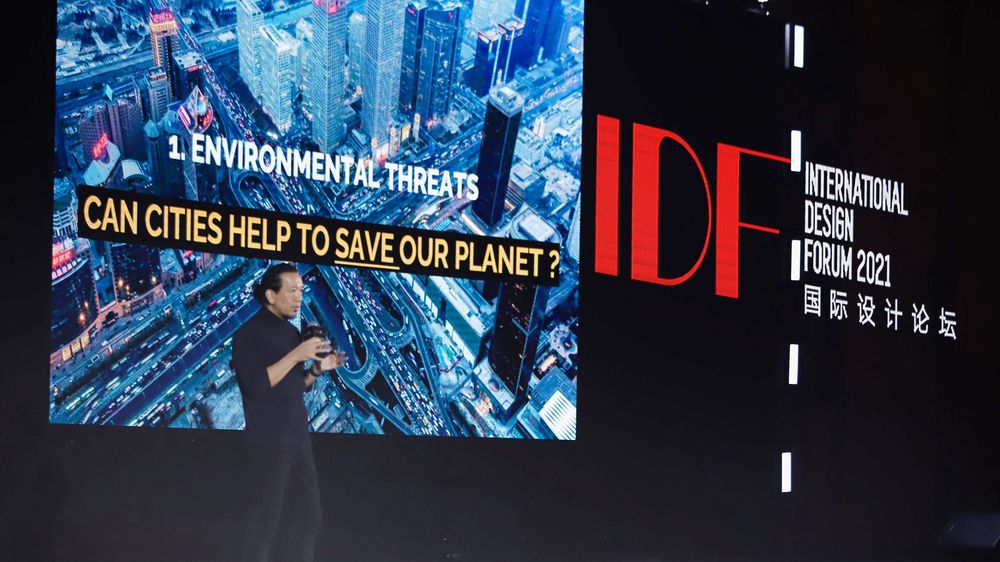
Georges Hung at the International Design Forum, Guangzhou Design Week, 2021Guangzhou. Image: Guangzhou Design Week – IDC 2021.
What the consensus gets wrong
For a decade, urban thinking in the region has rested on three confident ideas: build up, build smart, and bring daily needs within fifteen minutes. Each has merit. Each now needs testing.
- Density is not intensity. For the same population, high-rise districts can carry 132–154% more life-cycle emissions than dense low-rise ones. Height is a choice with a carbon cost. What makes density worth living with is the public life, proximity and comfort it delivers.
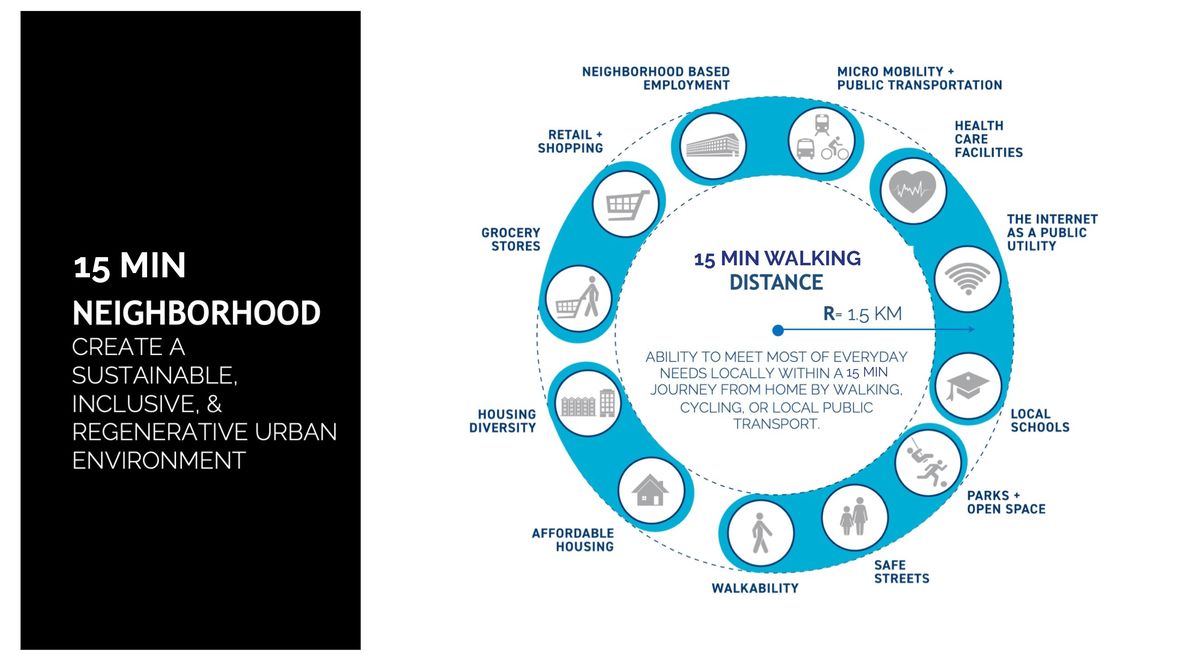
- Fifteen minutes is a principle, not a template. A fifteen-minute walk means something else at 45°C, on a humid evening, or at the age of eighty. Riyadh’s new metro—six lines, 176 km, 85 stations—will succeed or fail in the last few hundred shaded metres between station and front door.
- A smart city is not automatically a good one. Hangzhou’s City Brain cut congestion sharply, and raised hard questions of privacy and control. Technology-first megaprojects have proved fragile; The Line at NEOM has been scaled back. Cities grow best through evidence, iteration and trust.
AI can make a city more efficient. Only design can make it more worth living in.
AI and sustainability, properly understood
Used well, AI makes design more evidence-based. Digital twins such as Virtual Singapore test wind, sunlight and heat before anything is built; generative tools test hundreds of massing options against daylight and carbon in hours. Across buildings alone, AI could save around 300 TWh of electricity. Yet AI also runs on power, water and land, and in the Gulf it is being planned at gigawatt scale. Data centres are urban infrastructure. They belong in the same plan as housing, transit and water.
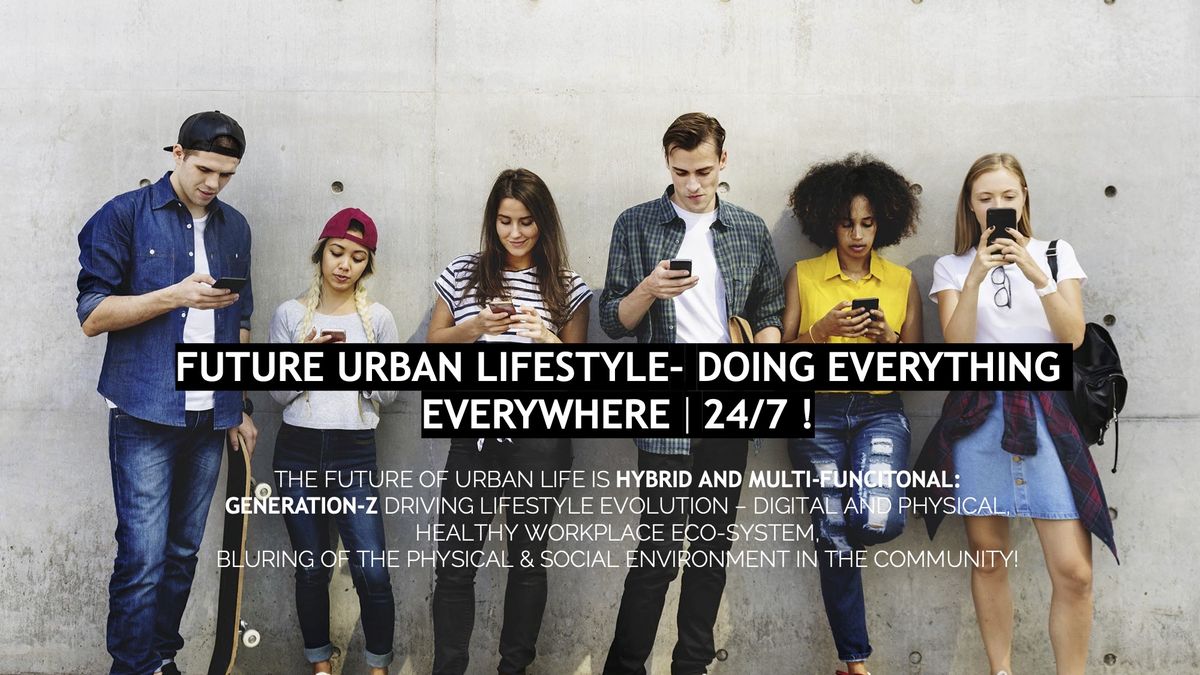
The deeper change is social. As information, transactions and routine work move to screens, the value of the city shifts to what only presence can give: learning from others, shared public life, trust and belonging. The public realm matters more, not less. And in hot climates, sustainability starts with comfort—shade, water, planting and transit are what let people live well outdoors and use less energy indoors.
Defining Intencity
The intense city is one where daily needs are close and comfortable to reach, public life is open to every age, resources are used with care, and technology serves the public with its trust. Five tests set it apart from a city that is merely dense or merely smart.
- ProximityCan residents reach daily needs, work and transit within a comfortable walk or short ride, in every season?
- ComfortAre streets and public spaces shaded, cooled and usable for most of the year and most hours of the day?
- ResourceAre carbon, energy and water per resident falling, including the demands of digital infrastructure?
- BelongingIs there free, safe public space and culture for every age, income and background, rooted in local story?
- IntelligenceIs data used transparently, with consent and accountability, to improve public life rather than only to control it?
Six shifts
- From density to intensity. More life per hectare, not more floors. Towers belong on transit nodes, and must earn their height through the public life they carry—as Singapore’s Kampung Admiralty does, stacking a hawker centre, clinic and gardens beneath homes for older residents.
- From car city to shaded transit city. Redefine the fifteen-minute city as fifteen minutes in comfort. Continuous shade, covered links and places to pause, measured by walking time in the hottest month.
- From green image to climate infrastructure. Trees and parks are cooling systems, flood defences and public health. Native planting, reused water, reflective materials and district cooling, with shade treated as a utility as essential as lighting.
- From smart city to civic intelligence. AI designed around trust: digital twins shared with the public, open data, clear rules on use, and a human alternative for every digital service.
- From one generation to a city of all ages. Schools, clinics, markets and parks placed together, so grandparents and grandchildren share the same daily routes. Design every street for the slowest walker.
- From megaproject to living fabric. Renewal before replacement. Existing buildings hold carbon, memory and community. Record the stories of a place before changing it, and let local character, climate and culture guide new form.
The designer’s role
“We as architects and urbanists are conduits of experientially driven urban spaces—as connectors, curators, and life creators.”
- ConnectorLinking transit, energy, water and data networks with the public life they should serve, and bringing climate engineers and data scientists around one idea of place.
- CuratorChoosing among uses, evidence and tools—AI included—with judgment. As machines produce more options, the value lies in choosing well and explaining why.
- Life-creatorMaking the occasions for presence no algorithm can supply: the shaded square, the shared table, the street that invites people to stay.
What this means
City governments
- Measure intensity, comfort and resource use, not only density and growth.
- Plan data centres, energy, water and housing together.
- Make shade, planting and walkability part of every transit investment.
- Govern AI with transparency, consent and human alternatives.
Developers & investors
- Invest in public realm, mixed use and regeneration—they hold value longer than height alone.
- Report carbon, water and outdoor comfort alongside returns.
Technology providers
- Design urban AI for trust and accountability, and judge it by public outcomes.
Design teams
- Use AI to test against climate and carbon, then apply judgment.
- Design for the hottest hour, the slowest walker and the longest life of the building.
- Record and respect the stories of a place before changing it.
The city worth being in
The future of these cities will not be decided by how tall they grow or how many sensors they install. It will be decided by whether people can walk in the shade to meet a friend, whether a grandmother and a child share the same park, and whether the city still feels like itself.
The future city will not be measured by how high it rises or how much it knows, but by how fully people can live in it.